[ D4T4 CRYPT ORG ]

>-Quaere Cosmos Arcana Imperii-<

  • Home
  • Phys.Org | Space News
  • arXiv.org Astrophysics \ Galaxies
  • ESA Aladin A
    • ESO Aladin B
  • Architecture
    • Architects
  • Astrophysics
    • Black Holes
  • Fine Arts
  • LINKS
    • Star Gazing UK Blog
    • In The Sky: Sky Atlas
  • Linux
    • Man Pages
  • Cinema
    • Film Noir
    • Notable Film Directors
  • UFO / UAP: INDIGO X-RAY FOXTROT

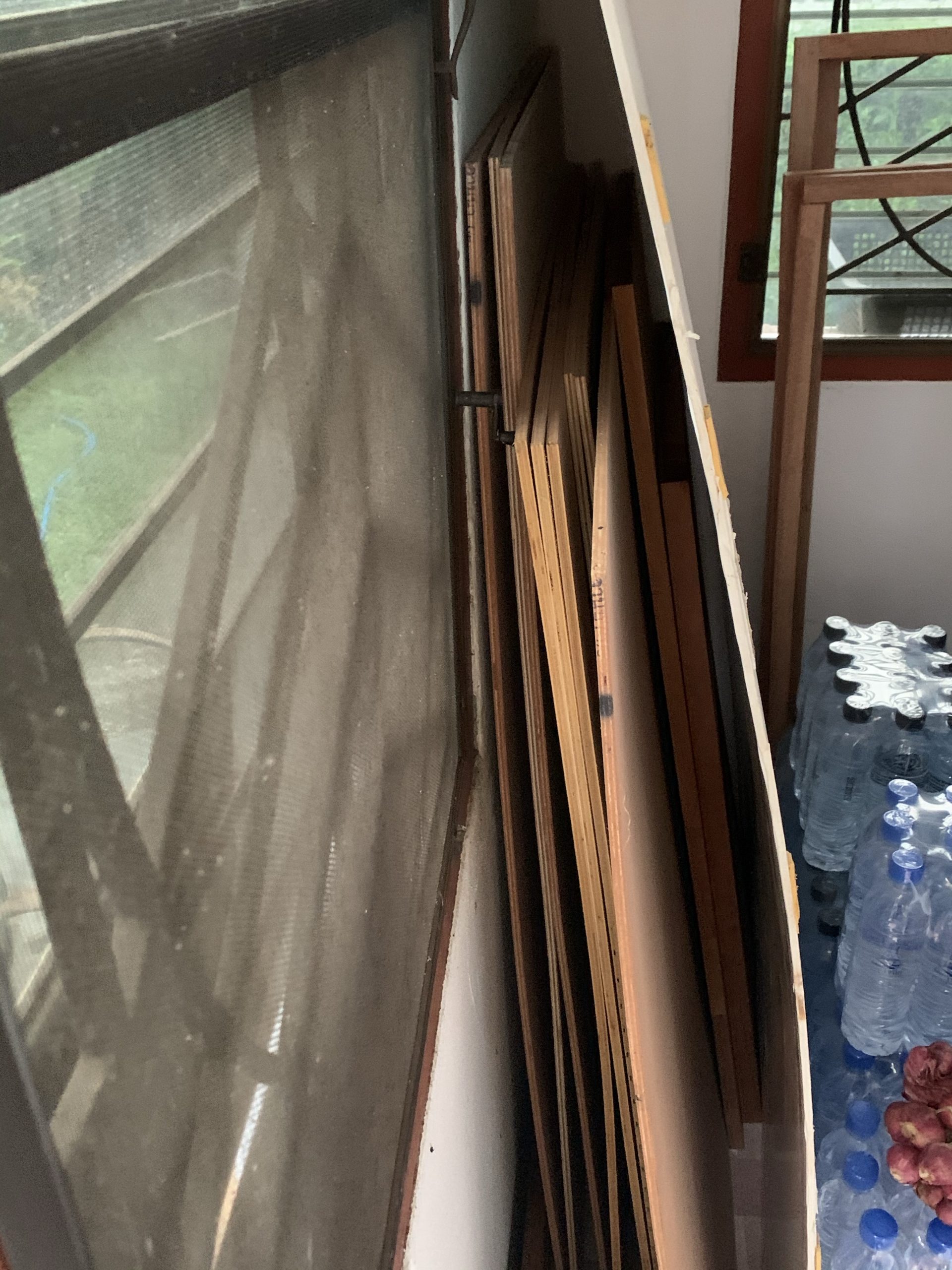
Woodworking Setup for Art Studio

April 7, 2020 by blogadmin

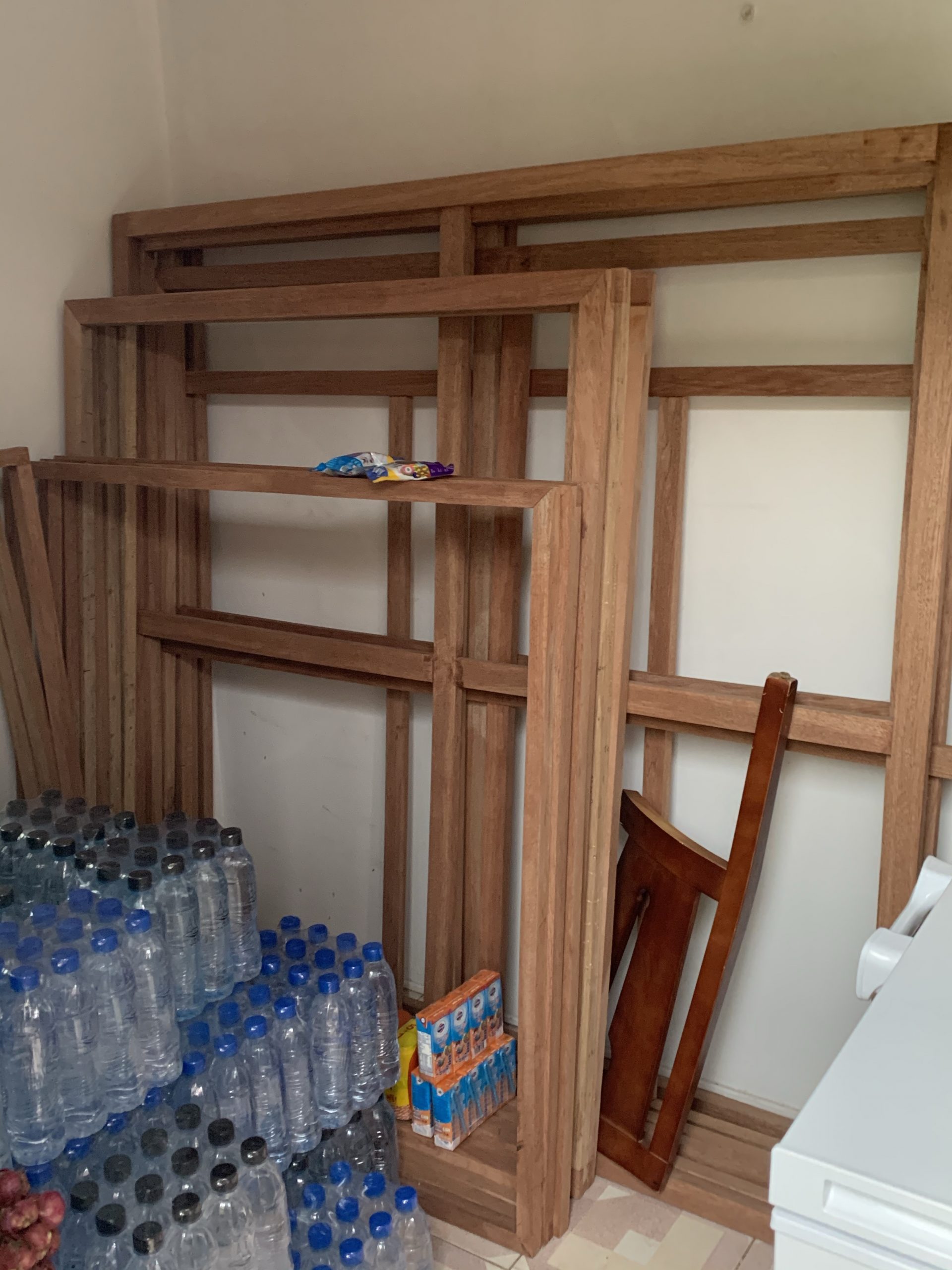
So the best idea I have had today has probably been to create this post which covers what might be needed to perform the tasks related to the creation of stretcher bar frames and or the repair or ongoing maintenance or stretcher bar frames.

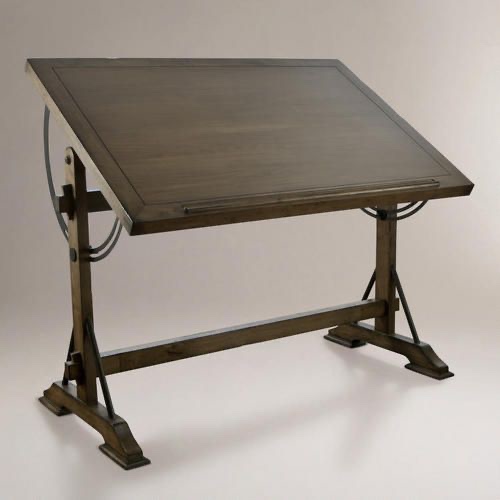
The other need for the studio is a canvas stretching table which in my case needs to be something that I don’t have to expend a lot of physical energy or effort to complete the task and that will be suitable for the pre primed canvas I use.

The dimensions of such a table would be quite large due to the nature of the work that I do but I am willing to except that it might need to be a combination of sawhorses and plywood instead of a giant heavy table which would be very difficult to move around.

This gets me thinking that I need adjustable sawhorses so I can change the height and then lay on a large piece of plywood and I might actually need to do this double in certain cases where the canvas is actually much larger and that gets me thinking that too harsh or horses would not be enough that I would actually need four or six or even eight of them.

I saw what were referred to as samurai sawhorses but I only need the very basic version of those which I would actually call a ninja sawhorse or something that was not triangle legs which take up too much space and are hard to put close together more for something like an eight or a T shape sawhorses because those can be stacked together easily or create tables that actually look quite nice and do not haveThe aesthetic failures or foot traffic interference issues that wide legs sticking out in all directions will cause.

And unfortunately whatever solution I do come up with also needs to consider that I don’t have the most time in the world in which two have these made and enjoy them and actually get some real work done.

an art studio requires so much woodworking actually that it’s endless because of all of the tables for working with wood and drawing tables and color mixing tables and taborets and easels and every imaginable tool in between eventually creates a situation where the studio is bigger than the person running it and it’s a wonder that anybody would actually get anything done or eventually realize If they were creating a space more than they were creating art.

So for right now I’m just looking for something where I can run a jigsaw and do some basic cups without having to lean over to far and maybe be able to line up two of these in a big piece of plywood or a big piece of wood and do some basic canvas stretching for various works.

The best option I can think of is making some pretty heavy duty sawhorses and getting a few pieces of wood that I can put on top of them.

Filed Under: Uncategorized

Brought to you by NSF

May 22, 2019 by blogadmin

your world brought to you by NSF Every day you encounter something made possible by the National Science Foundation.

More at https://www.nsf.gov/news/special_reports/btyb/index.jsp?WT.mc_id=USNSF_51

This is an NSF News item.
Source: NSF

Filed Under: Uncategorized

National Science Foundation announces new Diamond Achievement Award

May 9, 2019 by blogadmin

Black hole at the center of Messier 87, a massive galaxy in the nearby Virgo galaxy cluster.

The National Science Foundation has announced a new award — the NSF Diamond Achievement Award — which will be presented for the first time to the international team of researchers who recently captured the first-ever image of a black hole.

On April 10, in coordinated press conferences across the globe, the Event Horizon Telescope collaboration announced that its planet-scale array of eight ground-based radio telescopes, which was forged through international collaboration, had …

More at https://www.nsf.gov/news/news_summ.jsp?cntn_id=298500&WT.mc_id=USNSF_51&WT.mc_ev=click

This is an NSF News item.
Source: NSF

Filed Under: Uncategorized

University at Buffalo Critical Conversations

April 29, 2019 by blogadmin

More at https://www.nsf.gov/news/speeches/cordova/19/fc190403_criticalconversations.jsp?WT.mc_id=USNSF_51

This is an NSF News item.
Source: NSF

Filed Under: Uncategorized

Astronomers capture first image of a black hole

April 10, 2019 by blogadmin

black hole image

The Event Horizon Telescope (EHT) — a planet-scale array of eight ground-based radio telescopes forged through international collaboration — was designed to capture images of a black hole.

Today, in coordinated press conferences across the globe, EHT researchers reveal that they have succeeded, unveiling the first direct visual evidence of a supermassive black hole …

More at https://www.nsf.gov/news/news_summ.jsp?cntn_id=298276&WT.mc_id=USNSF_51&WT.mc_ev=click

This is an NSF News item.
Source: NSF

Filed Under: Uncategorized

Debris from anti-satellite test no danger to ISS, India says

April 6, 2019 by blogadmin

India insisted Saturday that debris from its anti-satellite missile test was not a danger to the International Space Station, in a rebuff to criticism from the US space agency.
Source: Phys Org

Filed Under: Uncategorized

Scientists set to unveil first picture of a black hole

April 6, 2019 by blogadmin

The world, it seems, is soon to see the first picture of a black hole.
Source: Phys Org

Filed Under: Uncategorized

Unexpected rain on sun links two solar mysteries

April 5, 2019 by blogadmin

For five months in mid 2017, Emily Mason did the same thing every day. Arriving to her office at NASA’s Goddard Space Flight Center in Greenbelt, Maryland, she sat at her desk, opened up her computer, and stared at images of the Sun—all day, every day. “I probably looked through three or five years’ worth of data,” Mason estimated. Then, in October 2017, she stopped. She realized she had been looking at the wrong thing all along.
Source: Phys Org

Filed Under: Uncategorized

Gravitational waves helping to expose black holes, dark matter and theoretical particles

April 5, 2019 by blogadmin

Gravitational waves – the invisible ripples in the fabric of space predicted by Albert Einstein – are opening up a new era of astronomy that is allowing scientists to see parts of the universe once thought to be invisible, such as black holes, dark matter and theoretical subatomic particles called axions.
Source: Phys Org

Filed Under: Uncategorized

Self-driving spacecraft set for planetary defence expedition

April 5, 2019 by blogadmin

Engineers designing ESA’s Hera planetary defence mission to the Didymos asteroid pair are developing advanced technology to let the spacecraft steer itself through space, taking a similar approach to self-driving cars.
Source: Phys Org

Filed Under: Uncategorized

Next Page »

SCI-NEWS.com

  • Ornithologists Identify Cryptic New Bird Species in Japan
    by Natali Anderson on March 18, 2026 at 1:47 am

    Genetic and acoustic evidence show that the rare Ijima’s leaf warbler (Phylloscopus ijimae) is actually two distinct bird species, including the newly-identified Tokara leaf warbler -- both with […]

  • Oviraptors May Have Needed the Sun to Hatch Their Eggs
    by News Staff on March 17, 2026 at 11:42 pm

    New experiments indicate bird-like oviraptorid dinosaurs could not fully warm their eggs with body heat alone, instead combining brooding with solar warmth in semi-open nests. The post Oviraptors May […]

  • DNA’s Building Blocks May Have Arrived from Space, Asteroid Ryugu Samples Suggest
    by News Staff on March 17, 2026 at 9:42 pm

    Samples returned by JAXA’s Hayabusa-2 mission from the C-type asteroid (162173) Ryugu contain all five canonical nucleobases -- purines (adenine and guanine) and pyrimidines (cytosine, thymine and […]

  • Early Triassic Cyclidan Crustacean Had Powerful Jaws
    by Enrico de Lazaro on March 17, 2026 at 1:51 am

    Paleontologists have described a new species of enigmatic cyclidan crustacean on the basis of three well-preserved specimens from the Early Triassic Guiyang biota of China. The post Early Triassic […]

  • Neanderthals May Have Hunted Giant Elephants that Roamed across Prehistoric Europe
    by Enrico de Lazaro on March 16, 2026 at 11:16 pm

    Chemical clues preserved in the teeth of straight-tusked elephants (Palaeoloxodon antiquus) from the 125,000-year-old site of Neumark-Nord in Germany suggest these massive animals traveled hundreds […]

  • New Kind of Planet May Lurk in Milky Way: Extreme World of Magma and Sulfur
    by News Staff on March 16, 2026 at 8:25 pm

    New observations of L 98-59d, a member of the five-planet system L 98-59, suggest it harbors a vast global magma ocean that traps sulfur deep inside, forming a previously unrecognized class of […]

  • Tropical Bush Cricket’s Hot-Pink Phase May Be Nature’s Perfect Disguise
    by Natali Anderson on March 16, 2026 at 6:31 pm

    Entomologists in Panama have observed a leaf-masquerading katydid species that begins life bright pink before turning green days later, a shift that may mimic rainforest leaves that flush red or pink […]

  • Supergiant Star Makes Rare Leap to Hotter Phase, Astronomers Say
    by News Staff on March 16, 2026 at 12:10 pm

    Long-term observations of WOH G64 -- once considered the most extreme red supergiant star in its galaxy -- reveal that the star has undergone a dramatic transition, possibly shedding part of its […]

  • Sun May Have Escaped Milky Way’s Crowded Core Billions of Years Ago
    by News Staff on March 14, 2026 at 12:55 am

    Using a vast catalog of Sun-like stars built by ESA’s Gaia mission, astronomers have found strong evidence that our home star traveled outward with thousands of stellar counterparts roughly 4 to 6 […]

  • New Fossil Crocodile from Ethiopia Lived alongside Australopithecus afarensis
    by News Staff on March 13, 2026 at 3:31 am

    Paleontologists analyzing fossils from Ethiopia have described a previously unknown crocodile species that shared the landscape with a hominid species called Australopithecus afarensis. The post New […]

  • Early Howler Monkeys Adapted to Eating Leaves 13 Million Years Ago
    by News Staff on March 12, 2026 at 2:38 am

    Fossil jaws of the ancient monkey species Stirtonia victoriae from the La Victoria Formation in Colombia suggest that a shift toward leaf-eating allowed early primates in South America to grow larger […]

  • Astronomers Witness Aftermath of Catastrophic Planetary Collision
    by News Staff on March 11, 2026 at 10:08 pm

    An unusual flickering of a young F-type star called Gaia20ehk and an expanding cloud of dust around it suggest that a catastrophic planetary crash unfolded in real time, offering a rare glimpse of […]

  • New Research Links Daily Multivitamins to Slower Biological Aging
    by News Staff on March 11, 2026 at 7:42 pm

    In a randomized clinical trial of older adults, researchers found that taking multivitamins for two years modestly slowed epigenetic markers of aging -- equivalent to roughly four months less […]

  • Astronomers Observe Neutron Star Crash in Unexpected Environment
    by News Staff on March 11, 2026 at 5:19 pm

    Using NASA’s Chandra X-ray Observatory and other telescopes, astronomers have traced a short-duration gamma-ray burst event called GRB 230906A to a faint dwarf galaxy embedded in a vast stream of […]

  • Study: Raccoons Don’t Just Solve Puzzles for Food, They Do It for Fun
    by News Staff on March 11, 2026 at 3:30 pm

    In a new study led by University of British Columbia Ph.D. student Hannah Griebling, raccoons (Procyon lotor) continued manipulating complex puzzle boxes long after retrieving the only marshmallow […]

  • 275-Million-Year-Old Amphibian Relative with Twisted Jaws Rewrites Early Tetrapod Diets
    by News Staff on March 11, 2026 at 1:15 am

    A new genus and species of archaic stem tetrapod from the Permian period has been identified from fossil jawbones found in Brazil. The post 275-Million-Year-Old Amphibian Relative with Twisted Jaws […]

  • Ancient Parrot DNA Points to Pre-Inca Animal Trade
    by News Staff on March 11, 2026 at 12:25 am

    Ancient DNA from brightly colored feathers found in Peru shows that at least four distinct species of Amazonian parrots -- the scarlet macaw (Ara macao), the blue-and-yellow macaw (Ara ararauna), the […]

  • VLT Discovers Third Gas Cloud near Milky Way’s Central Black Hole
    by Enrico de Lazaro on March 10, 2026 at 10:27 pm

    The newly-identified gas cloud, dubbed G2t, follows nearly the same orbit as two known clouds, suggesting they were all expelled by a pair of massive stars near the core of our Milky Way Galaxy. The […]

  • Two New Bird Species Identified in Amazonia
    by Natali Anderson on March 10, 2026 at 1:09 am

    An antbird long thought to be a single widespread species across the Amazon rainforest is, in fact, several different ones. Among them are two newly-described species -- Cercomacra mura and […]

  • 3I/ATLAS is Unusually Rich in Methanol, ALMA Observations Show
    by News Staff on March 9, 2026 at 10:26 pm

    Astronomers using the Atacama Large Millimeter/submillimeter Array (ALMA) have detected hydrogen cyanide (nitrogen-bearing organic molecule commonly seen in comets) as well as unusually high levels […]

Copyright © 2026 · Dynamik-Gen on Genesis Framework · WordPress · Log in